

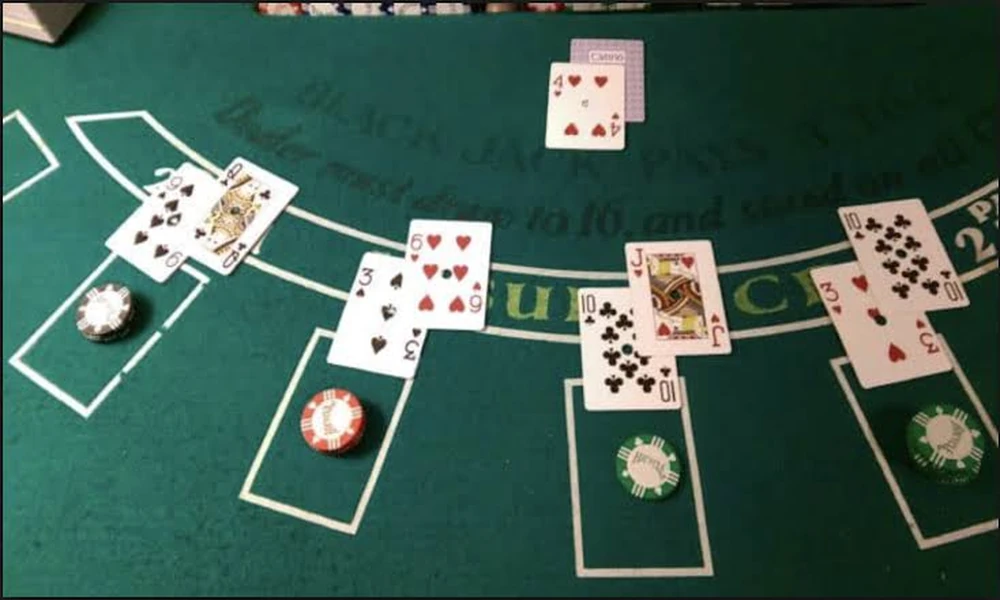
Two tables sit forty feet apart with the exact same minimum sign on both. One is a relaxed game where the dealer waits for every hand to settle. The other moves like a conveyor belt, and you lose the buy-in difference in an hour without playing a single hand worse. Most players never notice the gap because they sit down before they look.
So here’s the promise: by the end of this piece you’ll know how to scout a blackjack pit in about three minutes, before you ever touch a chip. You’ll learn which numbers on the felt actually matter, why the pace of a table costs more than its minimum, and how to pick a seat that fits how you like to play. I’ll use blackjack at Mystic Lake Casino as a working example now and then, mostly because its posted structure makes the reading exercise concrete and easy to follow.
Quick preview of the four things you’ll check: the minimum and whether it holds all day, the side bet math, the dealer’s pace, and the mood of the players already in seats. Get those right and you’ll sit down somewhere you actually want to stay.
Why the minimum sign is the least useful number on the table
Every pit puts its table minimums in flashing letters, so that’s the first thing a new player reads and the last thing that should decide the seat. A ten dollar table is only cheap if the dealer runs it calmly and you’re comfortable playing at that level. I’ve watched a ten dollar game cost people more than a twenty five dollar game next door, simply because the fast table made them press bets they hadn’t planned on.
What you want instead is the minimum that holds all day. Some pits quietly raise minimums at peak hours, which turns a comfortable ten dollar game into a twenty five dollar one at eight in the evening. Others, and Mystic Lake is a clean example here, advertise a ten dollar game that runs around the clock. That’s a real difference. It means you can plan a session and know what a hand costs when you arrive.
My take: if the minimum jumps at night, treat it as a different casino. You didn’t sit down for that game.
Do the side bet math before you touch the felt
Side bets look like free lottery tickets and behave like the most expensive thing on the table. The payoff numbers on the felt tell you how wild the swings are, and the swings tell you whether the bet belongs in your session at all.
Look at what the pit actually lists. A side bet paying up to 200 to 1 for specific three card combos is dangling a huge number in front of you for a bet that hits almost never. A progressive side bet starting at ten thousand dollars and climbing has the same shape: tempting, and stacked with a house edge you can’t see on the felt. Those bets can be fun. They’re not where you make money, and the pit is betting you forget that in the noise of a good hand.
Want a real check on how people interact with table games, including the promotional side of them? The National Gallery of Art keeps a broad public archive of how games of chance have been depicted and understood across cultures, and it’s a surprisingly grounding read on why spectacle sells. The point is that the spectacle is designed. Treat every flashy payoff as an invitation, not a calculation.
A rule I use: one side bet per session, capped at a number you’d shrug off losing. Otherwise you’re playing a different game than the one you came for.
Read the dealer’s pace, not the dealer’s face
Pace is the number nobody posts and everybody feels. Stand near a table for thirty seconds and watch how fast hands resolve. A dealer who waits for every player to signal, counts slowly, and keeps chips neat will give you time to think. A dealer who sweeps cards before you’ve decided is giving you a different game, and a more expensive one if you’re the type to make quick calls.
Here’s the honest part: pace matters more than rules for most leisure players. Basic strategy decisions are the same on a six deck shoe as anywhere else. What separates a good session from a frustrating one is whether you had time to make them. If you’re new, you want the slower table even if it’s two rows deeper into the pit. If you’re quick, you want the fast one. Pick based on you, not on the minimum.
How to test the pace in thirty seconds
- Watch one full round and count how long it takes to settle.
- Note whether the dealer waits for hand signals or rushes past them.
- Check whether chips are paid before the next hand starts or after.
- Listen for the dealer calling the game clearly enough to follow.
If a table fails two of those, walk. There’s always another one.
A scouting framework you can run in three minutes
I call it the Three-Minute Read, and it’s the checklist I’d hand to a friend visiting a new casino floor. It has four moves, in order, and you can run it without ever sitting down.
- Read the felt. Minimum, side bet payoffs, and any all day rules. This is the cheapest information on the floor.
- Watch one full shoe’s worth of pace at two tables. Not a full shoe, just a minute at each. Compare.
- Scan the players in seats. A quiet, focused table is different from a loud one. Neither is wrong; pick the one that matches your mood.
- Ask the dealer one question. Whether the minimum holds all night is the single most useful thing you can ask, and dealers answer it honestly.
Run it once and you’ll never sit down blind again. Run it twice and you’ll start noticing things the sign never tells you, like which tables pay the side bets cleanly and which dealers call the game in a way you can actually follow.
When to pick a busy table and when to walk
Busy tables aren’t automatically bad. They slow the game down, which helps a new player, and the energy is part of why people come. Evening promotions and themed nights are built exactly for this mood, and Mystic Lake’s Cosmic Blackjack nights are a clear example of a pit using energy as the product. On nights like that, the table is the point.
But there’s a limit. If you can’t hear the dealer, can’t see the cards, or can’t get a clear hand signal in edgewise, the table is costing you more than it’s giving. Walking away from a crowded game isn’t rude. It’s just reading the room correctly.
The bottom line on scouting a table
Reading a blackjack table is a three minute skill and it changes the whole session. The minimum sign is a start, not a decision. Side bets are spectacle with a cost. Pace decides how well you play. And the mood of a table tells you more about whether you’ll enjoy yourself than any number on the felt.
If you want one habit to walk away with, make it this: never buy in before you watch one round. The seat you pick is the most valuable decision you’ll make all night, and it’s the only one you don’t have to pay for.