

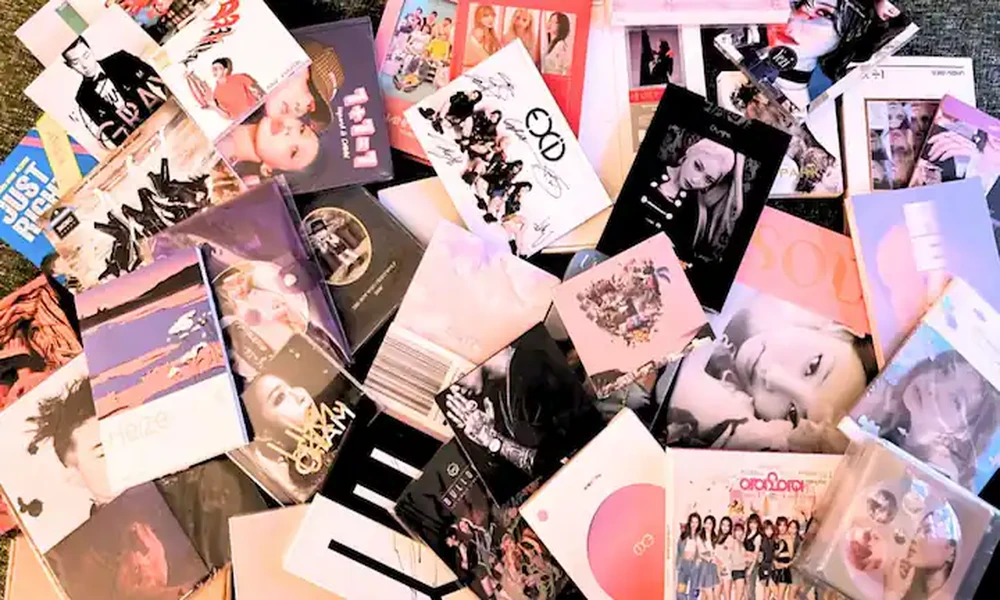
Forty-seven photocards. That’s how many unique variants one Stray Kids album can produce when you account for every version, every member, and every pre-order benefit. No single purchase gets you all of them. That’s entirely by design, and it’s the core mechanic that transformed K-pop from a music genre into one of the most organized collecting hobbies on the planet.
If you’ve ever wondered why fans buy the same album four or five times, or why a single photocard sells for $30 on the resale market, this is your answer. The collecting system is deliberate, layered, and genuinely fun once you understand it. Here’s how it actually works.
Albums as Physical Collectibles, Not Just Music
Western band merch follows a simple formula: tour shirt, vinyl, maybe a signed poster. K-pop blew that model up completely. Albums in K-pop function as physical collectible sets first and audio products second. Open a standard release and you’ll find a photo book, unit and member photo cards, a folded poster, a random inclusion card, and often a QR code for a digital fan sign lottery entry. The music? It’s in there too, on a CD that many fans never actually play.
A single album comeback routinely ships in four to eight distinct versions. Each version carries different cover art, different photocard pools, and sometimes a different running track order. The math gets staggering fast: a group with seven members, four photocard versions per member, across four album versions equals 112 unique photocards from a single comeback, and no fan is pulling all 112 from random purchases alone. Trading becomes necessary. Community becomes inevitable.
This is the part that outsiders often misread. Fans buying six copies of the same album aren’t being irrational. They’re playing a collecting game with real scarcity mechanics built in, the same way a trading card collector buys multiple booster packs chasing a specific rare pull.
The Scale of What This Has Become
The collecting culture didn’t stay niche. According to South Korea’s Ministry of Foreign Affairs, the number of Hallyu fans worldwide reached 225 million by 2024, spanning 119 countries, with Hallyu-related exports bringing in approximately US $14.16 billion in that year alone, as reported by researchers at the University of Melbourne’s Pursuit publication. That figure covers music, drama, and consumer goods combined, and it reflects how deeply K-pop culture has embedded itself in real spending behavior across the globe.
The intellectual property side of that story is just as striking. According to central bank data cited by the International Trade Council, South Korea’s exports of intellectual property covering music, film, and gaming grew to $9.85 billion in 2024, more than triple the level of a decade ago. The International Trade Council’s 2025 analysis frames this as a deliberate cultural export strategy, not an accident. Albums, merchandise drops, and fan engagement tools are all part of how labels structure that outbound value.
For collectors on the ground, those numbers translate to one thing: the market for physical K-pop goods is enormous, increasingly professionalized, and nowhere near slowing down.
What Serious Collectors Actually Track: The POB-Version-Member Framework
Most new fans start by buying one album. Within a year, they’ve usually developed what you could call a PMV strategy: organizing their collection around Pre-order Benefits (POB), album Versions, and specific Members. Understanding each layer changes how you shop entirely.
Pre-order benefits are exclusive cards or prints available only when you order before a cutoff date, usually from a specific retailer. Miss the window and that card is gone from retail forever. It lands on the resale market at a markup.
Version variants are the multiple editions of the same album. Buying Version A might guarantee you photocard sets from one member grouping; Version B shuffles a different pool. Collectors targeting a full set of one member’s cards often buy all versions of that version’s pool, then trade duplicates away.
Member focus is how most collectors self-organize. Picking a bias and collecting everything featuring that member is the most common entry point. It creates a natural scope that stops a collection from sprawling into chaos.
Running all three layers simultaneously, knowing which POB window is open, which version carries your member’s card, and which retailer ships authenticated official packaging, is the actual skill the hobby rewards.
Official vs. Unofficial: A Real Distinction That Costs Real Money
The counterfeit photocard market is not a minor nuisance. Unofficial prints flood secondary marketplaces at prices that look like bargains but carry zero resale value in the collector community. Official Korean-printed cards are authenticated by the album packaging they arrive in. Buying a card loose on a general marketplace without provenance documentation is a gamble.
This is where sourcing matters. The collector community’s consensus is blunt: buy from sellers who can show the original album the card came from, ideally in a sealed or unboxed video. Reputation tracking in fan trading servers is taken seriously, often more seriously than any platform’s own seller rating system.
For fans who want to bypass the secondary market entirely and get directly to official, authenticated goods, well-stocked specialist retailers are the cleaner route. For Stray Kids specifically, browsing curated Stray Kids merch from a dedicated K-pop exchange platform means you’re looking at albums, POB photocards, and plushies sourced for authenticity, which removes a layer of risk that general marketplaces can’t eliminate.
Album Sales Records and Why They Keep Breaking
The physical album is thriving in K-pop at a moment when it’s declining nearly everywhere else. In 2024, the International Federation of the Phonographic Industry (IFPI) reported that 17 of the world’s top 20 best-selling albums were by K-pop artists, making it the leading genre in both physical and digital sales. The Economics of K-pop analysis published on Music Business Research in March 2026 traces this to the same multi-version, multi-inclusion structure that drives collecting behavior. When groups like Stray Kids or SEVENTEEN sell millions of copies in a week, a significant portion of those sales come from fans buying multiples specifically for photocards.
That’s a feedback loop that works for everyone involved: labels get sales volume that charts globally, fans get physical goods with tangible collector value, and the secondary market keeps the community engaged between comebacks.
A Practical Starting Checklist for New Collectors
If you’re just getting into K-pop collecting, the learning curve is real but short. Here’s what actually helps:
- Pick one group and one member to focus on first. Scope creep is how collections become overwhelming.
- Track POB windows before a comeback drops. Follow the group’s official social accounts and fan update accounts simultaneously.
- Buy sealed albums from authorized retailers when possible. The unboxing experience is part of the point.
- Join a trading community early. You’ll get duplicates. Trading them is faster and cheaper than buying every card you want from resellers.
- Store photocards in toploaders immediately. Cards that flex or curl lose value fast.
- Document what you own from day one. Spreadsheets, dedicated apps like Bias Room, or even a simple photo log all work.
The hobby rewards patience and organization more than raw spending. A collector who plans their purchases around specific version targets and pre-order windows will almost always build a better collection than someone who buys reactively.
The Community Is Half the Point
Collecting K-pop albums without engaging with the fan community is like playing a multiplayer game offline. The trading networks, group buys, and comeback watch parties are where most of the actual value lives. Discord servers dedicated to specific groups have hundreds of active traders at any given moment. X (formerly Twitter) fan accounts post real-time alerts when rare cards surface for sale.
The fandom around a group like Stray Kids doesn’t just consume content. It builds infrastructure: databases cataloging every photocard ever released, price guides updated weekly, authenticated seller lists maintained by volunteer community members. That collective effort is what makes the hobby sustainable at scale.
Ready to actually start? Pick your group, identify the current era, find the version that carries your target card, and place that first order. The collection builds itself from there.