

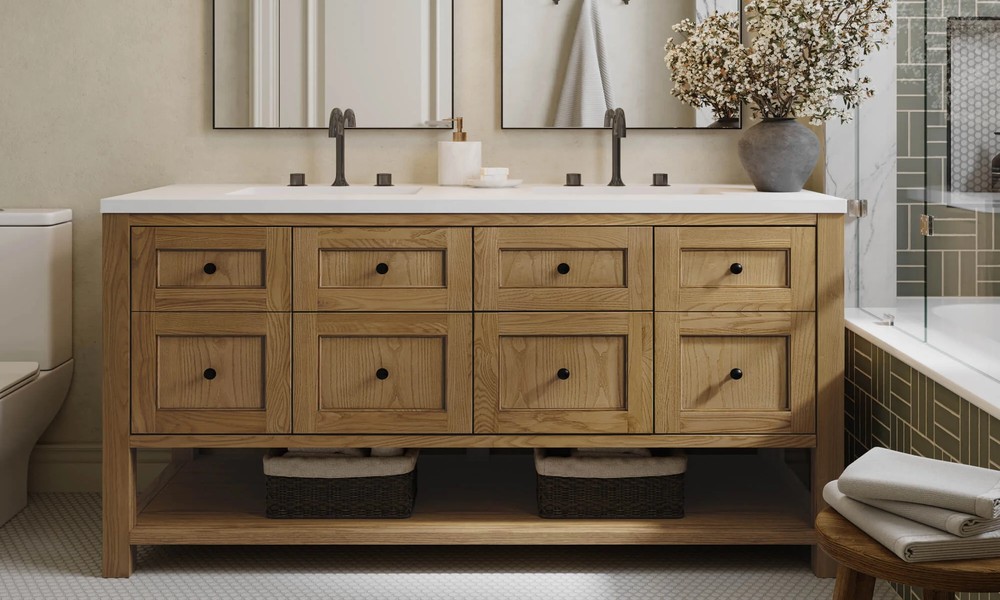
History repeats itself in the bathroom, too. Early vanities were little more than utilitarian cabinets, designed with function in mind and precious little attention paid to size or aesthetics. These days, the right vanity can be a statement piece, especially when matched to the dimensions and style of each space.
Early Bathroom Vanity Designs and Their Limitations
Traditional vanities came in a handful of standard sizes, usually crafted from hefty woods and finished in classic whites or dark stains. They were built to last, but their boxy designs often ate up valuable floor space, especially in homes where bathrooms were an afterthought. Storage was usually a single cabinet beneath the sink, which made organization a challenge, particularly in small rooms, where every inch counts.
Material choices reflected their era: ceramic or marble tops for the wealthy, while most homes made do with laminate or simple wood. The lack of options meant homeowners had little ability to customize for unique spaces.
The Shift Toward Space-Efficient Vanities
Modern living called for new solutions. As urban homes and condos shrank, so did bathrooms, pushing designers to rethink the bulky vanity. Compact and wall-mounted options emerged, creating the illusion of space and making cleaning a breeze. Single sink vanities, as narrow as 12 inches, became popular for powder rooms and half baths, offering just enough surface and storage without crowding the room.
The debate between freestanding and wall-hung vanities heated up. Freestanding models retained that furniture-like feel and worked well in larger, traditional bathrooms. Wall-hung vanities, on the other hand, brought a contemporary edge, making small rooms feel open and airy by showing more of the floor.
Modern Bathroom Vanity Options by Room Size
The right vanity starts with the right size. In small bathrooms, options from 12 to 28 inches wide deliver the essentials: a compact basin and a surprising amount of storage, especially with clever drawer designs. These pieces are perfect for powder rooms or tight ensuites where space is at a premium.
Moving up, medium-sized bathrooms benefit from vanities in the 30 to 48 inch range. These offer more countertop real estate and often feature expanded storage, sometimes even double-drawer layouts or open shelving below. They balance function and style, making them a solid choice for family bathrooms.
For those lucky enough to have a roomy master bath, 60-inch and larger vanities open the door to double sinks, expansive counters, and truly luxurious storage. These models can serve as the anchor of a high-end bathroom, offering space for couples to get ready simultaneously without bumping elbows.
| Room Size | Recommended Vanity Width | Typical Features |
|——————|————————|—————————————-|
| Small Bathroom | 12″-28″ | Single sink, wall-mount, compact storage|
| Medium Bathroom | 30″-48″ | Single or double drawers, extra counter |
| Large Bathroom | 60″ and above | Double sink, ample storage, luxury finishes |
Material and Finish Trends Over Time
Our tastes have shifted as much as our floorplans. Rustic oak and rich walnut textures are having a moment, lending warmth and depth to the bathroom. At the same time, countertop innovation has exploded. Polymarble, engineered quartz, and solid surface materials offer resilience, easy cleaning, and a wide palette of looks.
Colors, too, have expanded far beyond basic white. Black, grey, and even bold woodgrain finishes are in demand, letting homeowners personalize their space.
Customization and Technological Advances
Soft-close mechanisms are now the norm, quietly elevating even the simplest drawers. Hidden compartments, built-in organizers, and modular storage make it easier to keep clutter at bay. Floating vanities, with their clean lines and architectural feel, now dominate the pages of design magazines.
Selecting the Ideal Vanity Based on Bathroom Size
The best decisions start with honest spatial planning. Measure the available width but also factor in traffic flow: swinging doors, nearby fixtures, and even where you stand while using the sink. Experts suggest that bathroom vanities with flexible sizing and installation options can simplify the process.
Freestanding units suit large rooms with plenty of open space, while wall-mounted styles work wonders in smaller bathrooms. Ultimately, blend the vanity’s form with your room’s function, ensuring beauty doesn’t come at the cost of storage or comfort.
Installation and Maintenance Considerations Through the Years
Installation has evolved alongside design. Wall-mounted vanities require studs and precise leveling but reward you with easier cleaning underneath. Freestanding versions are simpler to install but can collect dust and moisture along the base. Maintenance is easier than ever, thanks to durable finishes and stain-resistant countertops, reducing the effort needed to keep bathrooms looking pristine.
The Future of Bathroom Vanities: Trends to Watch
Vanities are getting greener, with sustainable woods and recycled materials entering the market. Smart features, think touchless faucets, built-in LED lighting, and even integrated charging, are finding their way into more models. Homeowners crave personalization, and the future promises an even greater range of bespoke solutions, tailored for every taste and space.
From the cramped powder room to the sprawling master retreat, today’s bathroom vanities prove that bigger isn’t always better, just smarter.